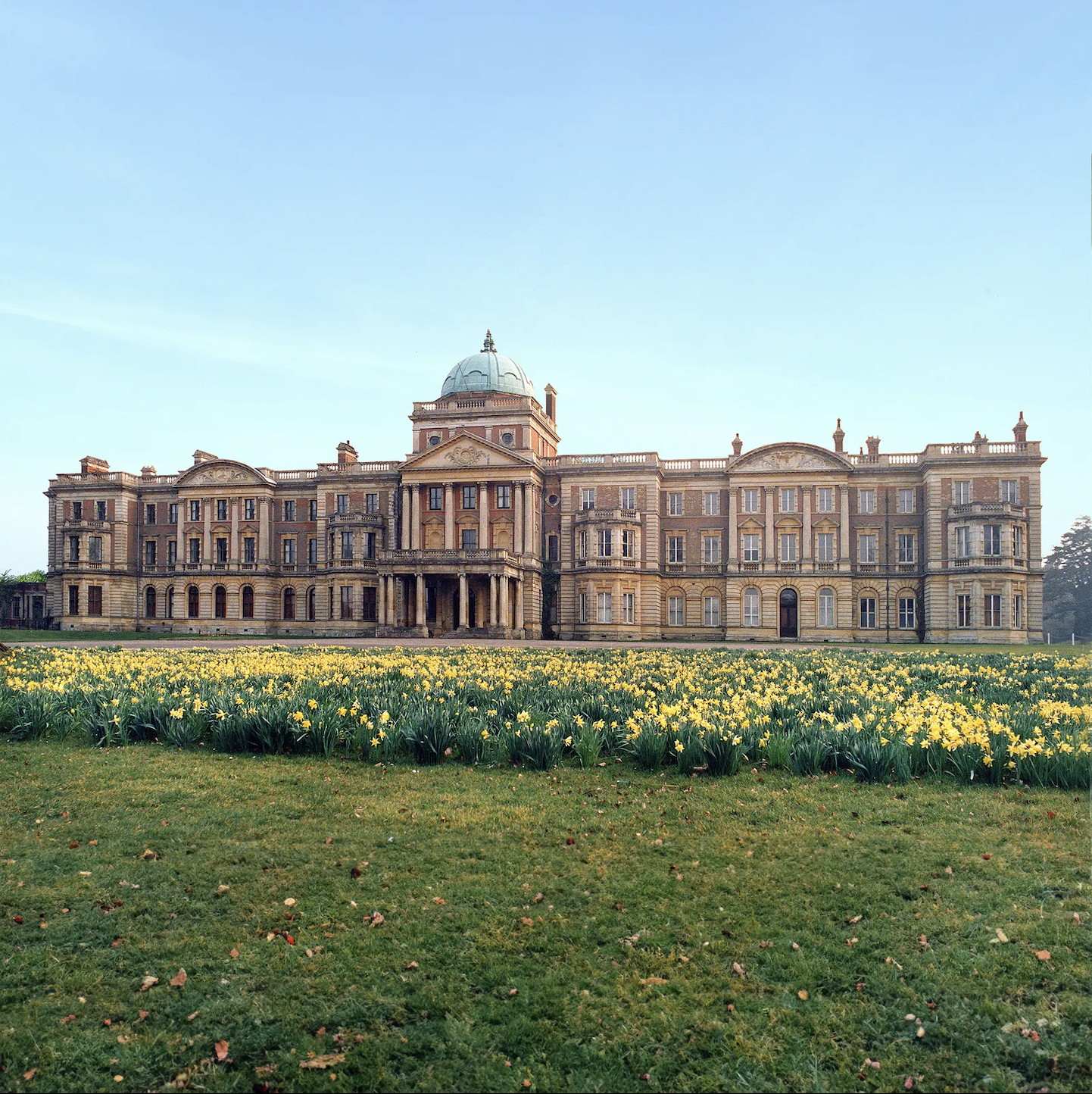
This post is by Guy Shrubsole. Image: Elveden Hall on the 22,500-acre Elveden Estate, one of the members of the Government’s new National Estate for Nature.
“Land ownership in England is highly concentrated”. Not my words, but those of the UK Government, in a recently-launched consultation on land use. It was a welcome admission to read – I’ve been investigating who owns land in England for years, and have concluded that less than 1% of the population owns half the country.
Some of England’s biggest landowners also bear an outsize responsibility for ecological damage and destruction – such as the Forestry Commission, who chopped down swathes of ancient woods during the 20th century to replace them with conifer plantations. Or the handful of aristocrats and billionaires who own vast peat bogs, and set fire to them each year to maximise the numbers of grouse to shoot.
So it was still more welcome to read the news that Environment Secretary Steve Reed has called on England’s largest landowners to do far more to restore nature. The Government has launched a National Estate for Nature, bringing together organisations like the Ministry of Defence, the Forestry Commission, the Crown Estate, water companies like United Utilities and conservation charities like the National Trust. Intriguingly, the group also includes two large private estates: the 22,500-acre Elveden Estate in East Anglia, and the 25,000-acre Clinton Devon Estates in Devon. Collectively, these landowners own millions of acres of land, covering around a tenth of England.
The new National Estate for Nature essentially overhauls the old Major Landowners’ Group (MLG) – a grouping of large public, private and third sector landowners originally formed under the New Labour government. It was set up back in 2003 with the task of improving the condition of England’s prime nature reserves – its Sites of Special Scientific Interest (SSSIs) – many of which belong to this small handful of landowners. At first, there was progress: New Labour ministers set the group a target of getting 95% of England’s SSSIs into favourable or recovering condition by 2010, a goal which was met on time.
But when the Tories took power, they scrapped the target and allowed the MLG to languish. David Cameron appeared more interested in getting the public sector to simply flog off its landholdings – such as his abortive attempt to privatise the public forest estate. And the Conservatives’ drive for deregulation resulted in far less scrutiny of environmentally damaging activities by major private landowners. Figures that I uncovered last year via a Freedom of Information request showed that just 16% of the SSSIs owned by water companies were in good nick.
Even the former Environment Secretary Thérèse Coffey – not best known for being a friend of the Earth – belatedly realised that the country’s biggest landowners needed to do more for nature. “One of the things that we need to work a bit further and faster on are things like the major landowners’ group,” she declared in 2023. “It’s surprising quite how many leading organisations have not got their land in a good state.”
By setting up the National Estate for Nature, Labour has now seized the bull by the horns. It’s challenging the country’s biggest landowners to better manage all their land, not just the relatively small areas that are designated as SSSIs. And its mission is now to deliver on a wider set of green targets set by the Environment Act 2021 – cleaning up rivers, reversing the decline in species and creating much-needed new habitats – and meeting 30×30. Having the group chaired by the Environment Secretary will also give it much greater political salience and deter it from becoming just another talking shop. Its name is a nod towards a demand voiced by environmental campaigners for a ‘Public Nature Estate’ – something I’ve written about in my recent book The Lie of the Land, and which has been championed by the Wildlife and Countryside Link coalition as “the biggest change to nature conservation since the 1940s”. It’s much-needed – England has lost half of its farmland birds in the past half-century, and even once-common species like hedgehogs are in seemingly terminal decline.
But to reverse this collapse in wildlife, the Government will need to do more. First, it should demand full transparency from the country’s biggest landowners: all of those in the group should be required to disclose the state of nature on their landholdings, and what they’re doing to improve things. Ministers should harness the cleansing power of sunlight to show the public what’s going on in our countryside, and pressure major landowners into being better stewards.
Next, it needs to change the outdated legal purposes keeping some public bodies stuck in the past. The Forestry Commission, for example, is still guided by an archaic remit last updated in 1967, anchoring it in a twentieth-century obsession with conifer plantations rather than equipping it to fix the climate and nature crises of the present.
Lastly, Labour needs to drop its recent rhetorical war on environmental regulators. In their final years in office, the Tories – egged on by landowning and shooting interests – almost destroyed Natural England simply for doing its job. After an initial period of détente, some Labour ministers have now renewed these attacks with gusto, with Rachel Reeves raging about protections for rare species like great crested newts and bats supposedly holding back economic growth.
The reality is that the Government needs to hold major landowners to account for what they do to nature – and they need strong environmental regulators to do this. Yesterday’s announcement by the Environment Secretary is a bold step in the right direction. The sooner the rest of the Cabinet recognises this, the sooner we might reverse the catastrophic decline in wildlife on these sadly de-wilded isles.
Members of the new National Estate for Nature
As listed by the Government here:
- Environment Agency
- Forestry Commission/Forestry England
- Natural England
- MOD
- MoJ
- DfT (including National Highways and Network Rail)
- MHCLG/Homes England
- DESNZ
- DfE
- Cabinet Office
- The Church Commissioners (Church of England)
- The Crown Estate
- The Duchy of Cornwall
- The Duchy of Lancaster
- Elveden Estate
- Clinton Devon Estates
- United Utilities
- Yorkshire Water
- National Trust
- RSPB
- Wildlife Trusts
- Canal and River Trust
 Who owns England?
It sounds like progress Guy. Do we know if all the other major landowners, like the Dukes, were invited and refused or could come on board at a later date? With the RSPB and National Trust setting out their plans and due to publish their updates, this should encourage the others to step up to the mark and do the same. But, as you say, an official body like the Office for Environmental Protection needs to hold them to account on what they do. If the King and heir to the throne were to set an example this would hopefully shame the others. Keep up the great work holding their feet to the fire Guy!
LikeLike
This is a great start!
LikeLike